
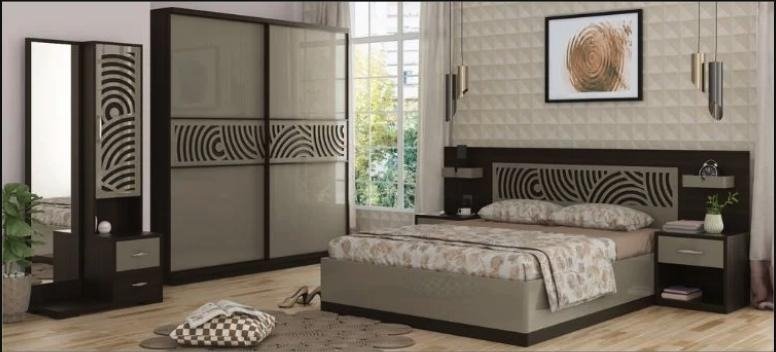
A kids' bedroom set has a tougher job than almost any other furniture in the house — it needs to survive years of rough daily use and still feel age-appropriate as a child grows from toddler to teenager. Here's how we approach designing for that whole stretch.
Choose Furniture That Adapts, Not Just Furniture That's Cute
A theme-heavy design (cartoon characters, bright novelty shapes) looks charming at age five and dated by age nine. We generally recommend a clean, neutral base — simple lines, a versatile colour — with personality added through easily changeable elements like bedding, wall decals or accessories that can evolve without replacing the furniture itself.
Prioritize Durable Materials
- A solid plywood or engineered wood carcass handles daily bumps and climbing far better than lightweight particle board.
- Scratch-resistant laminate or acrylic shutters stay looking presentable through years of school bags and toys.
- Rounded edges and corners on beds and study tables are a simple, meaningful safety upgrade for younger children.
Storage That Teaches Organization
Open, easy-to-reach shelving and labeled bins encourage younger kids to actually put things away themselves, while a proper wardrobe with a lower hanging rod (that rises as they grow, if designed with adjustable rods) keeps clothing storage genuinely usable rather than just decorative.
Plan for a Real Study Zone
- A dedicated study table with proper task lighting supports focus far better than a shared surface.
- Built-in bookshelves or cubbies keep school supplies from spreading across the whole room.
- Leave room to swap a smaller chair for an adjustable one as the child grows taller.
Ask about adjustable-height study tables and rods during your consultation — small design choices now can add years to how long the furniture stays genuinely useful.
Think in Stages, Not One Fixed Design
The most future-proof kids' bedroom sets are modular by nature — a bed, wardrobe and study unit that can be rearranged or added to as needs change, rather than one fixed configuration a family eventually outgrows and replaces entirely.
Frequently Asked Questions
Should kids' bedroom furniture be themed or neutral?
A neutral base with personality added through easily changeable elements (bedding, decals) tends to last much longer than heavily themed furniture, which children typically outgrow within a few years.
What materials are most durable for kids' furniture?
A solid plywood or engineered wood carcass with scratch-resistant laminate or acrylic shutters handles daily rough use significantly better than lightweight particle board.
How can I make a kids' bedroom set last longer as they grow?
Choose modular, adjustable elements — like adjustable-height study tables and wardrobe rods — so the set can adapt rather than needing full replacement.