
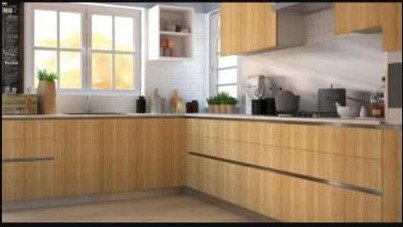
If you've started asking around for modular kitchen quotes, you've probably noticed the numbers vary wildly — one showroom quotes half of what another does for what looks like the same kitchen. That's because "modular kitchen cost" isn't a single price point; it's the sum of several independent decisions. Understanding each one is the fastest way to get a quote you can actually trust.
The Four Things That Actually Move the Price
Most of the cost variation in a modular kitchen comes down to four factors, and in our experience, homeowners usually only know about one or two of them going in.
- Carcass material — the box structure behind your shutters. Plywood costs more than MDF or particle board, but holds up far better against moisture in an Indian kitchen.
- Shutter finish — laminate is the most budget-friendly, acrylic and PU sit in the mid-to-premium range, and toughened glass or high-gloss membrane finishes cost the most.
- Layout and running length — pricing is usually quoted per running foot, so an L-Shape or U-Shape kitchen with more counter length naturally costs more than a compact Straight layout.
- Hardware and accessories — soft-close hinges, drawer channels, pull-out baskets and corner units add real functionality, and real cost.
A Rough Sense of Ballpark Pricing
Every kitchen is different, but as a general reference point, a straight or parallel modular kitchen with laminate shutters typically starts in a more accessible bracket, while an L-Shape or U-Shape kitchen in acrylic or PU finish with an island moves well into the premium range. The only way to get a number that means something is a site measurement and a written quote that itemizes carcass, shutters and hardware separately — walk away from any quote that gives you a single lump-sum figure with no breakdown.
Where Factory-Direct Pricing Makes a Real Difference
A large chunk of what you pay at a typical showroom goes toward retail margins and dealer commissions rather than the kitchen itself. Because Parth Kitchen Industries designs and manufactures every kitchen in our own factory in Umbergaon, Gujarat, you're paying for materials and craftsmanship — not a middleman. It's a major reason our customers consistently get more kitchen for the same budget.
The fastest way to a reliable number: book a free consultation, tell us your kitchen's dimensions, and we'll give you an itemized quote — not a guess.
Getting the Most Kitchen for Your Budget
If budget is tight, spend where it matters most and save where it doesn't. Prioritize a solid plywood carcass (it's what determines how long the kitchen lasts) and soft-close hardware on the drawers you use daily, then choose a laminate finish over acrylic if needed — laminate has come a long way and looks genuinely premium in the right colour. You can always upgrade shutters later; replacing a warped carcass is a much bigger job.
Frequently Asked Questions
How much does a modular kitchen cost per running foot in Gujarat?
Pricing per running foot varies with material and finish — laminate-shutter kitchens with a standard carcass sit at the lower end, while acrylic, PU or glass-finish kitchens with premium hardware cost more. Get a site-specific quote from Parth Kitchen Industries for an exact number.
Is plywood or MDF better for modular kitchen cost savings?
MDF is cheaper upfront, but plywood resists moisture and holds screws better over years of daily use — especially near the sink and hob. For a kitchen, the long-term value usually favours plywood.
Does a factory-direct manufacturer really cost less than a showroom?
Yes — showroom pricing typically includes retail overhead and dealer margins. Buying directly from the manufacturer, as with Parth Kitchen Industries, usually means better materials for the same budget.