
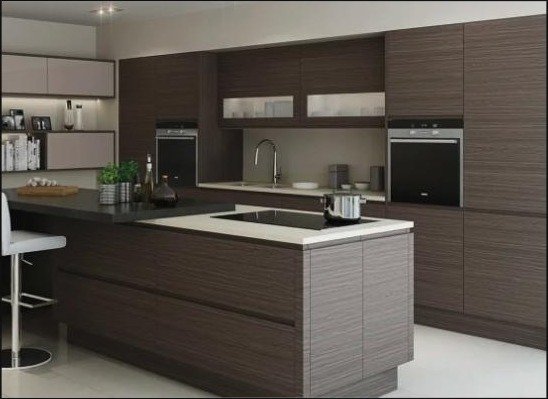
The shutters get all the attention in a kitchen showroom, but the material behind them — the carcass — is what determines whether your kitchen still looks and functions well ten years from now. Here's an honest comparison of the three materials we're asked about most.
Plywood: The Reliable Default
Plywood is layers of wood veneer bonded under pressure, which gives it strong screw-holding capacity and good resistance to warping. It handles moisture near the sink and steam near the hob better than MDF, and it's the material we recommend as standard for a kitchen carcass because it's the part of the kitchen you can least afford to have fail.
MDF: Smooth Finish, Lower Cost
Medium-Density Fibreboard is made from wood fibres bonded with resin under heat and pressure. It gives an extremely smooth, even surface — great for high-gloss or painted shutter finishes — and costs less than plywood. Its weak point is moisture: MDF can swell if it stays wet, so it's better suited to shutters and dry areas than the carcass of cabinets sitting directly under a sink.
WPC: Built for Wet Areas
Wood Plastic Composite blends wood fibre with polymer, making it genuinely waterproof rather than just water-resistant. It costs more than both plywood and MDF, which is why we typically suggest it selectively — under the sink cabinet, in a utility area, or for a kitchen in a particularly humid location — rather than for the entire carcass.
| Material | Moisture resistance | Cost | Best use |
|---|---|---|---|
| Plywood | Good | Mid | Full carcass (recommended default) |
| MDF | Low–Moderate | Lower | Shutters, dry-area cabinets |
| WPC | Excellent | Higher | Sink base, high-humidity areas |
We build every carcass in-house at our Umbergaon factory, so we can mix materials strategically — plywood where strength matters, WPC where water is a risk — instead of a one-size-fits-all approach.
Our Recommendation
For most homes, a plywood carcass with your choice of laminate, acrylic or PU shutters gives the best balance of durability and cost. If budget allows, upgrading just the sink-base unit to WPC is a smart, targeted way to protect the part of the kitchen most exposed to water.
Frequently Asked Questions
Is plywood better than MDF for a kitchen?
For the cabinet carcass, yes — plywood handles moisture and daily wear better. MDF is a fine, more affordable choice for shutters or dry-area cabinets.
Is WPC worth the extra cost?
It's worth it selectively — particularly for the sink-base cabinet or in very humid areas — rather than for the entire kitchen, where the cost difference adds up quickly.
Which material is best for a modular kitchen in a humid climate?
A plywood carcass with a WPC sink-base unit is a practical, budget-conscious way to get strong moisture protection where it matters most.