
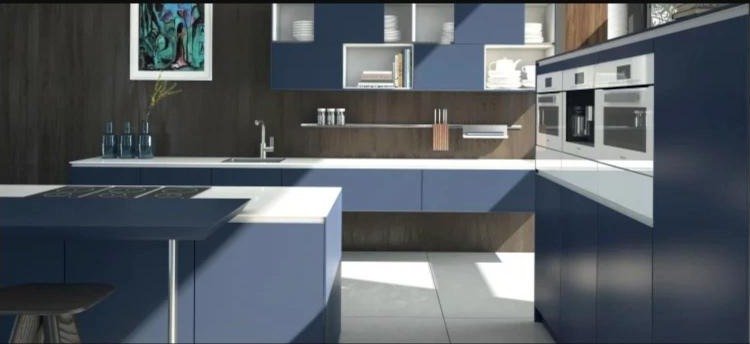
Before choosing finishes or layouts, most homeowners face a more basic decision: go modular, or hire a local carpenter to build the kitchen on-site. Both routes can produce a good kitchen — but they differ in ways that matter a lot once you're living with the result.
How the Two Are Actually Built
A modular kitchen is manufactured off-site in a factory using precision machinery, then assembled and installed in your home as pre-built modules. A carpenter-made kitchen is built on-site, board by board, by hand — which allows a lot of customization but depends heavily on that individual carpenter's skill and consistency on any given day.
Where Modular Wins
- Factory-cut panels and CNC-machined joints are far more precise than hand-cut joinery, which means better-fitting doors and drawers.
- Faster installation — typically weeks rather than the months an on-site build can stretch to.
- Cleaner installation process — no sawdust, on-site cutting or extended construction mess in your home.
- Consistent quality across every unit, since the same machinery and process builds every module.
Where Carpenter-Made Can Still Make Sense
- Very unusual room shapes or dimensions that don't suit standard module sizes.
- A tight upfront budget, where a skilled local carpenter may quote lower than a full modular kitchen — though this gap has narrowed significantly as modular manufacturing has become more accessible.
- A specific, one-off design detail a homeowner wants that isn't part of a manufacturer's standard system.
The Real Difference: What Happens After Year One
This is where the comparison usually gets decided. Site-built cabinets often rely on ordinary wood screws and simple hinges, which loosen with humidity and daily use over time. A quality modular kitchen — like the ones we build with a plywood carcass, soft-close hardware and factory-sealed edges — is engineered specifically to resist exactly that kind of wear, because it's assembled with hardware designed for repeated daily opening and closing.
Ask any carpenter-kitchen owner one question: would they choose the same route again after five years of use? The honest answers we hear are rarely a confident yes.
Our Honest Take
For the vast majority of homes, a modular kitchen from a manufacturer with its own factory — not a middleman assembling third-party parts — delivers better long-term value: tighter tolerances, faster installation, and hardware built for daily life. Carpenter-built kitchens still have a place for genuinely unusual spaces, but that's a smaller slice of homes than most people expect.
Frequently Asked Questions
Is a modular kitchen more expensive than a carpenter-made kitchen?
Pricing has converged significantly — a modular kitchen from a factory-direct manufacturer is often comparable to, or better value than, a skilled carpenter's on-site build once hardware quality is accounted for.
Which lasts longer, modular or carpenter-made kitchens?
A well-built modular kitchen generally holds up better over years of daily use, since factory-machined joints and purpose-built hardware resist wear better than typical on-site carpentry.
Can a modular kitchen be customized like a carpenter-built one?
Yes — modular systems today offer extensive customization in layout, material and finish, while still keeping the precision and speed advantages of factory manufacturing.